
FONTNAUTIC BLOG
Buying or Selling a Used Boat: How to Structure the Transaction Properly
Buying and selling are different processes, but both need clear information, realistic expectations and a well-ordered sequence of steps.
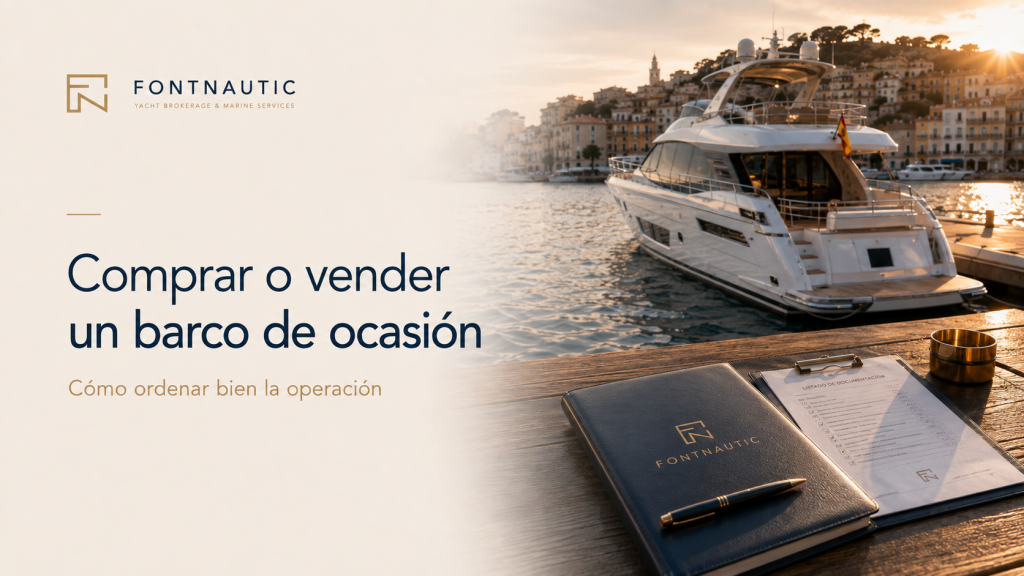
Buying or selling a used boat can seem straightforward until the questions begin: does the price make sense, which documents are missing, what should be checked, what happens with a deposit, how is a survey organised, who handles the change of ownership? The key is not to add bureaucracy. It is to put the transaction in order before problems appear.
Buying and selling are different processes
The buyer is trying to reduce uncertainty. The seller needs to present the boat properly, justify the asking price and keep the transaction moving without wasting time on enquiries that will never become a genuine viewing.
Both sides need clear information, realistic expectations and an understandable sequence of steps.
If you want to buy a boat
1. Define the intended use before choosing the brand
Before falling in love with a particular boat, think about how many people will normally be aboard, where you will use it, how many nights you expect to spend on board, what speed and range you need, where it will be berthed and what level of maintenance you are prepared to take on.
A boat can be in good condition and still be the wrong choice for the way you intend to use it.
2. Separate the purchase price from the ownership budget
Berthing, insurance, fuel, servicing, haul-outs, antifouling, batteries, electronics, repairs, taxes and transport can significantly change the real cost. There is no universal percentage that applies to every boat.
3. Analyse before you travel
Ask for recent photographs, engine details and hours, maintenance history, major works, inventory and available documentation. A good preliminary review helps you decide whether the boat is worth travelling to see.
4. View, sea trial and inspect according to the boat
A viewing is not a substitute for a technical inspection. Where the transaction justifies it, the next step may include a survey, engine diagnostics, a sea trial, haul-out or checks of specific systems.
The purpose of a survey is to understand condition and identify defects or issues. If you need to determine what the boat is worth for a particular purpose, that is a valuation or valuation survey.
5. Do not leave the paperwork until the end
Ownership, registration or flag, encumbrances, technical documentation, taxes and the structure of the transaction should be reviewed before closing. The exact documents vary according to the boat, parties and countries involved, so yacht documentation support should review the case where necessary.
If you want to sell your boat
1. Position the asking price against the market and condition
Other advertised prices are a reference, not proof of the eventual sale price. You need to compare genuinely similar boats and adjust for engines, hours, maintenance, equipment, location, documentation and work already completed.
2. Decide what is worth doing before listing
Not everything needs to be repaired or renewed. It is useful to distinguish between work affecting safety or operation, work that clearly improves presentation, and upgrades whose cost is unlikely to be recovered by the seller.
3. Prepare a coherent documentary history
Invoices, maintenance records, refit information, inventory, engine data and documentation help explain the boat. Where there is a relevant issue, transparency is usually more useful than turning every defect into a surprise during the viewing.
4. Photography and description should represent the real boat
Good presentation is not about hiding things. It is about allowing the buyer to understand the boat, its layout, equipment, condition and strengths before travelling.
5. Qualify enquiries before organising viewings
Understanding the prospective buyer’s context, explaining the transaction and confirming genuine intent protects both the owner’s and the buyer’s time.
Negotiation starts before anyone talks about a discount
An offer should not be analysed simply as “asking price minus offered price”. Condition, pending work, documentation, delivery terms, survey, timing and the way the transaction will close can matter just as much as the final figure.
What Fontnautic does during the process
We can support a transaction from the first question through to handover: market analysis, presentation, viewings, negotiation, survey coordination, documentation, maintenance, transport or delivery when they form part of the case.
When you buy a boat marketed by Fontnautic, we do not charge the buyer a brokerage fee for supporting the transaction. Taxes, duties and external services have their own costs where applicable.
It is the one that reaches closing without buyer or seller discovering too late information that could have been organised earlier.
 FONTNAUTIC BLOG
Cannes Yachting Festival 2026: fechas, horarios, marcas y guía
FONTNAUTIC BLOG
Cannes Yachting Festival 2026: fechas, horarios, marcas y guía
 PROFESSIONAL GUIDE
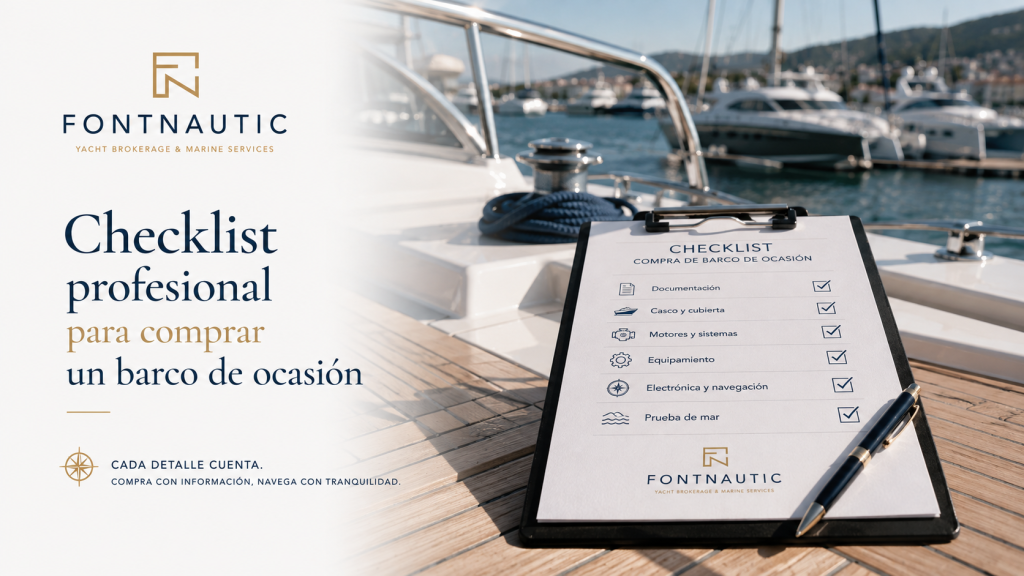
Professional Checklist for Buying a Used Boat
PROFESSIONAL GUIDE
Professional Checklist for Buying a Used Boat
 INTERNATIONAL MARKET
Dubai International Boat Show 2026: New Dates and the International Market
INTERNATIONAL MARKET
Dubai International Boat Show 2026: New Dates and the International Market
FONTNAUTIC
Has this article raised a question about your boat?
Your enquiry will include the URL of this article so we know what you were reading.