

PROFESSIONAL GUIDE
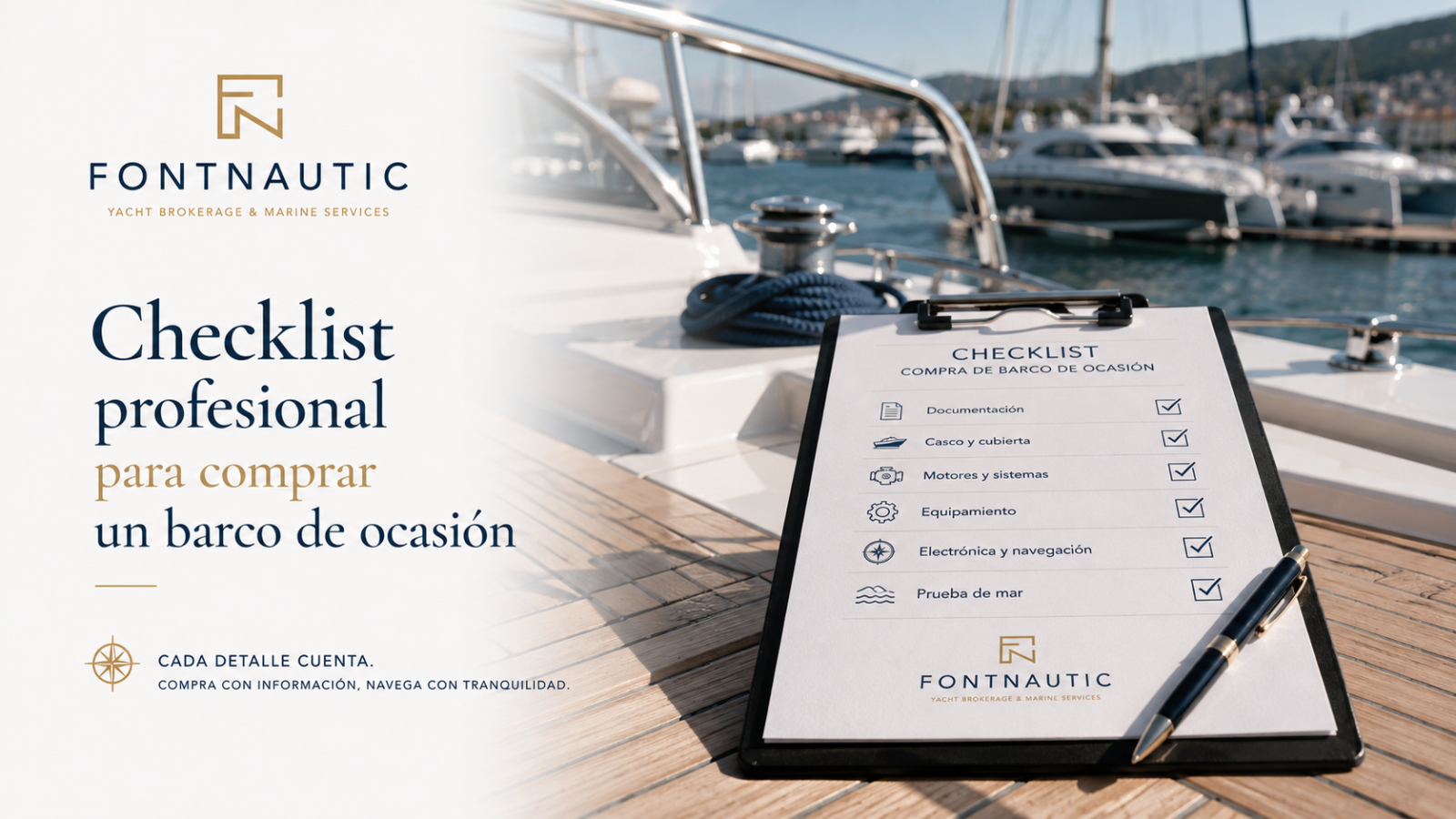
Professional Checklist for Buying a Used Boat
A practical checklist for reviewing a used boat methodically, spotting warning signs and knowing when to pause a purchase and request a specialist inspection.
Content reviewed to remain consistent with Fontnautic’s current services, processes and terminology.
Buying a boat is much more than making a purchase. For many people it means beginning to imagine passages, anchorages, weekends away and time with family or friends. That is exactly why emotion should not replace proper checking.
Two boats of the same model and year, even with similar engine hours, can have completely different histories. This checklist brings together the points we use to structure an initial assessment before deciding what deserves a deeper technical inspection.
A checklist does not replace a survey, engine diagnostics or professional inspection where the transaction requires them.
1. Before travelling
- Confirm the exact make, model, year and version.
- Ask for the number of engines, model, power and hours.
- Request recent photographs, not only those used in the advert.
- Ask about previous owners and known history.
- Request maintenance invoices and evidence of major work.
- Confirm the location and whether the boat is afloat or ashore.
- Ask about flag, ownership and available documentation.
- Clarify exactly which equipment is included in the sale.
- Ask directly about breakdowns, accidents, osmosis, impacts, structural repairs or known problems.
2. First exterior impression
Before going inside, look at the whole boat. Differences in colour, cracks, deformation, repairs, impacts or very uneven maintenance can justify further questions.
- Gelcoat or paint: gloss, oxidation, cracking and repairs.
- Hull-to-deck joints and accessible high-load areas.
- Handrails, cleats, pulpits and deck hardware.
- Seals around windows, portlights and hatches.
- Teak: thickness, caulking, fasteners and heavily eroded areas.
- Platform, passerelle, covers and exterior mechanisms.
3. Hull and underwater body
Where the purchase justifies it, a haul-out allows inspection of areas that cannot be assessed properly from the berth.
- General hull condition.
- Antifouling and visible previous preparation.
- Anodes.
- Accessible through-hull fittings, valves and seawater intakes.
- Shafts, propellers, struts or sterndrives depending on the propulsion system.
- Rudders and visible play.
- Signs of impacts or repairs.
- Moisture, blistering or other signs that deserve professional measurement or analysis.
4. Engine room
A clean engine room does not guarantee perfect machinery, but it makes leaks, corrosion and pending work much easier to identify.
- Cold start where possible.
- Smoke, vibration, noises and alarms.
- Oil, fuel, coolant or water leaks.
- Belts, hoses and clamps.
- Heat exchangers, cooling system and signs of corrosion.
- Engine mounts.
- Bilges and traces of fluids.
- Filters and separators.
- Documented maintenance history.
- Generator: hours, starting, load and maintenance.
On high-value engines, dedicated diagnostics can provide information that a visual inspection cannot.
5. Electrical system
- Engine-start and service batteries.
- Chargers, alternators and inverters.
- Shore power and protection devices.
- Electrical panels and labelling.
- Visible wiring condition.
- Operation of lights and basic equipment.
- Additional generation: solar or other systems where fitted.
6. Electronics and navigation
- Chartplotter and charts.
- Radar.
- AIS.
- VHF.
- Autopilot.
- Depth sounders and instruments.
- Repeaters on the flybridge where fitted.
It is not enough for a screen to switch on: check important functions and understand the age of the system, because a complete electronics upgrade can be expensive.
7. Water, sanitation and comfort systems
- Fresh-water pumps.
- Water heater.
- Toilets and black-water tanks.
- Bilge pumps and alarms.
- Air conditioning or heating.
- Refrigerators, freezers and galley equipment.
- Watermaker where fitted.
8. Interior
Look especially for signs of damp, leaks and recent repairs.
- Headlinings around hatches and windows.
- Swollen or discoloured woodwork.
- Persistent odours.
- Carpets and areas beneath mattresses.
- Bottoms of lockers and poorly ventilated compartments.
- Doors that do not close properly or furniture that appears displaced.
9. Safety and equipment
Exact requirements depend on the flag, navigation area and applicable regulations. Even so, it is useful to inventory the equipment on board, its condition and any servicing requirements.
- Lifejackets.
- Life raft.
- Fire extinguishers and fixed systems.
- Pyrotechnics.
- EPIRB or other emergency equipment where fitted.
- Bilge pumps.
10. Documentation
Do not leave this until after agreeing the price.
- Ownership and registration document or equivalent.
- Hull identification / CIN-HIN where applicable.
- CE marking and available documentation where applicable.
- Engine details.
- Flag status.
- Possible liens or finance.
- Documented tax status.
- Inventory to be included in the contract.
The exact requirements depend on the boat and the transaction. If there are doubts, yacht documentation support should review the file.
11. Sea trial
- Engine starting and behaviour.
- Temperatures and alarms.
- Speed and rpm.
- Vibration.
- Steering and response.
- Trim tabs, trim, stabilisers or other systems.
- Autopilot and electronics where reasonable.
- Structural noises or abnormal movement.
12. Questions worth asking the owner
- What is the most expensive repair you have carried out?
- What would you do to the boat if you were keeping it for another five years?
- Is there any system that works intermittently?
- Which major maintenance item is coming up next?
- Has the boat ever suffered an impact, grounding, water ingress or casualty?
- Why is it being sold?
13. Signs that should slow the transaction down
None of the following automatically means rejecting the boat, but each deserves clarification before proceeding:
- The seller avoids a reasonable sea trial or haul-out.
- Engine hours, invoices and the stated history do not align.
- Essential documentation is missing and nobody can explain how it will be resolved.
- Structural repairs appear without sufficient supporting information.
- There is water, oil or fuel in the bilges with no clear source.
- There is pressure to pay a deposit before basic information can be reviewed.
14. What a checklist cannot do
This guide helps you ask better questions, but it does not turn a viewing into a survey. A professional may use measurements, technical experience, diagnostics, tests and a methodology that go far beyond a visual checklist.
If the transaction has sufficient financial or technical value, use the checklist to prepare for the viewing and then define the scope of an inspection / survey.
The best deal is not simply the one where you pay less. It is the one where you understand what you are buying and what it will need afterwards.
 FONTNAUTIC BLOG
Cannes Yachting Festival 2026: fechas, horarios, marcas y guía
FONTNAUTIC BLOG
Cannes Yachting Festival 2026: fechas, horarios, marcas y guía
 INTERNATIONAL MARKET
Dubai International Boat Show 2026: New Dates and the International Market
INTERNATIONAL MARKET
Dubai International Boat Show 2026: New Dates and the International Market
 BOAT SHOWS
Boot Düsseldorf: What It Offers Boat Buyers and the Next Dates
BOAT SHOWS
Boot Düsseldorf: What It Offers Boat Buyers and the Next Dates
FONTNAUTIC
Has this article raised a question about your boat?
Your enquiry will include the URL of this article so we know what you were reading.